
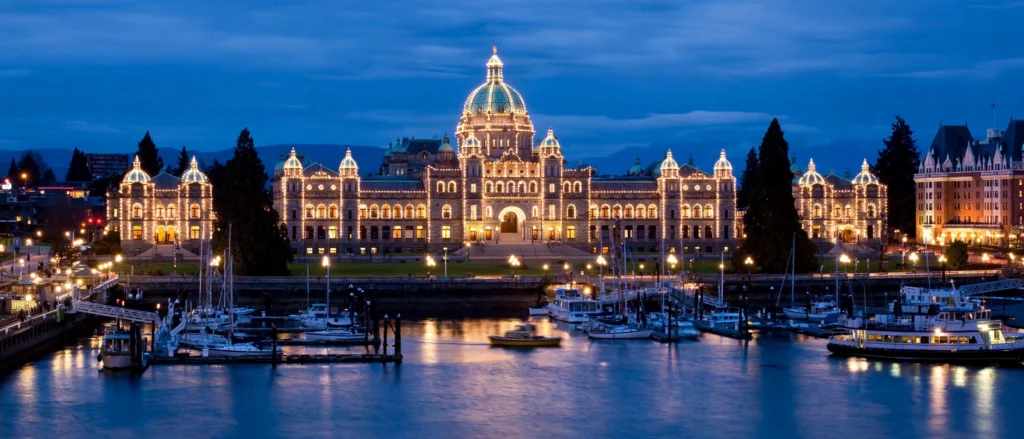
A new government in Victoria
Lorne Doerkson was sworn in as British Columbia’s 38th premier on Friday, November 20, at a ceremony at Government House in Victoria. Lieutenant-Governor Wendy Cocchia led the ceremony, which installed the province’s first Conservative cabinet in nearly a century.
Doerkson, the MLA for Cariboo-Chilcotin, became premier-designate after the B.C. Conservatives won a majority in the provincial election on October 24, 2026. The party won 63 of the 93 seats in the Legislative Assembly, unseating the NDP government led by former premier David Eby.
On Thursday, 63 Conservative MLAs were sworn in at the B.C. legislature. A 64th member is expected to take the oath after a judicial recount next week, according to reports of the swearing-in.
The change ends nine consecutive years of NDP-led government in British Columbia. It is the first time the B.C. Conservative Party has been elected to government in more than 100 years, and the first Conservative-led cabinet in the province since 1933, according to historical records cited in coverage of the transition.
A smaller cabinet, with familiar faces in key jobs
Doerkson unveiled a streamlined cabinet of 18 ministers and six ministers of state — 25 people in total, including the premier. The previous NDP government had 23 ministries, and Doerkson’s restructuring reduced that number to 18.
Several of the most important portfolios went to experienced members of the new caucus. Peter Milobar, the Kamloops Centre MLA, was named Minister of Finance. Caroline Elliott, a first-term legislator from West Vancouver-Capilano, was named Attorney General. Ryan Peterson, from Coquitlam-Burke Mountain, was named Minister of Health.
Claire Rattée, the Skeena MLA, was named Deputy Premier and Minister of Social Development. Jessy Sahota was named Minister of Public Safety and Solicitor General. Larry Neufeld, from Peace River South, was named Minister of Energy, Mines and Petroleum Resources. Trevor Halford was named Minister of Transportation and Infrastructure.
Doerkson also named parliamentary secretaries to support the cabinet, and Trevor Halford was named house leader. Teresa Wat was nominated as Speaker of the legislature.
What the new government says it will focus on
In a statement released by the province, Doerkson said British Columbians had voted for change and that his government was ready to deliver it.
“British Columbians voted for change and our government is ready to deliver it,” Doerkson said. “Our goal is to restore the belief that British Columbia is the best place in the world, and we do that by making life more affordable, supercharging our economy, helping our most vulnerable citizens and protecting the rights and freedoms of all British Columbians.”
The government said the new cabinet will focus on five priorities: an affordable B.C., a prosperous B.C., a healthy B.C., a safer B.C., and a strong and proud B.C. Those priorities cover tax relief and housing, investment and resource development, health care, policing and emergency preparedness, and education, families and reconciliation.
One early promise is already on the table. According to local reporting, Doerkson said his government will bring its promised $1,000 annual provincial income tax cut to the legislature in spring 2027.
What happens next
Doerkson has said there will not be a fall legislative session, to give his new cabinet members time to familiarize themselves with their files. The next session is expected to begin in early 2027.
Interim B.C. NDP leader Jennifer Whiteside offered her congratulations to Doerkson and his cabinet on Friday, while warning that the Conservatives appeared to be taking steps to scrap the NDP housing plan.